
Enrolling in an LPN program is a significant step towards a rewarding career in nursing. While excelling academically and mastering clinical skills are undoubtedly top priorities, there’s another equally vital component to your success: building strong professional relationships. Your LPN program isn’t just a place to acquire knowledge; it's also a foundational networking hub.

Connecting with Your Instructors
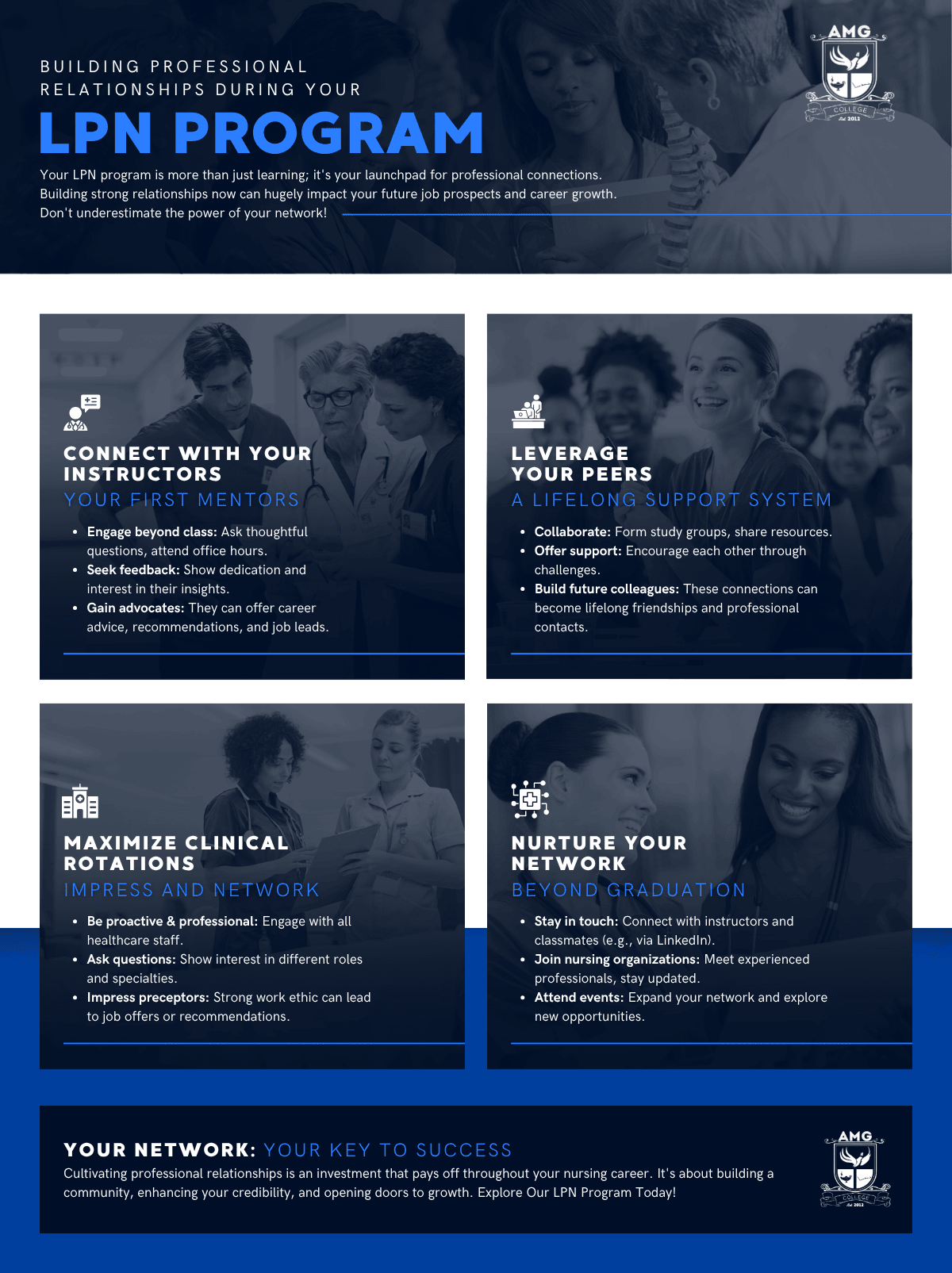
Your instructors are more than just teachers; they are seasoned nursing professionals with a wealth of experience and connections. Take the initiative to engage with them outside of formal lectures. Ask thoughtful questions after class, attend office hours, and seek their feedback on your progress. Showing genuine interest in their insights and demonstrating your dedication can transform them into valuable mentors and even future advocates. They can provide personalized career advice, write compelling letters of recommendation, and might even know of job openings or networking events perfectly suited for your aspirations.
Leveraging Your Peers
Your LPN classmates are on the same journey as you, facing similar challenges and celebrating comparable successes. They represent your immediate professional community and can become a powerful support system. Collaborate on study groups, share resources, and offer mutual encouragement. These peer relationships can evolve into lifelong friendships and professional connections.


Making the Most of Clinical Rotations
Clinical rotations offer a prime opportunity to expand your network beyond the classroom. Every nurse, physician, and healthcare professional you encounter during your clinicals is a potential connection. Be proactive, professional, and enthusiastic. Ask questions about their roles, express your interest in different specialties, and show initiative. Your preceptors, in particular, are observing your skills and work ethic; impressing them can lead to job offers or strong recommendations.
Beyond Graduation
Building relationships doesn't stop when you receive your LPN license. As you transition into your first nursing role, continue to nurture the connections you’ve made. Stay in touch with former instructors and classmates, perhaps through LinkedIn or occasional check-ins. Join professional nursing organizations to meet experienced nurses and stay abreast of industry trends. Attend workshops, seminars, and healthcare events in your community.

Ready to Cultivate Your Professional Advantage?
The connections you forge now—with instructors, peers, preceptors, and even guest speakers—can profoundly influence your clinical experience, future job prospects, and long-term career trajectory. Thinking beyond the classroom and actively cultivating these relationships will give you a significant edge in the competitive healthcare landscape.